



11 min read June 2026

Raised Garden Beds in Canada: How to Set One Up and What to Grow This Summer

Never grown your own food before? A raised garden bed is the best place to start. Here is a practical guide to setting one up this weekend and exactly what to plant right now for a productive summer harvest.

Read more ›
10 min read June 2026

E-Bike vs Road Bike: Which One Is Right for Your Summer in Canada?

E-bikes are everywhere right now, but are they actually better than a traditional road bike for summer riding in Canada? Here is an honest, practical comparison to help you figure out which one fits your lifestyle.

Read more ›
10 min read June 2026

Best Kayaks for Beginners in Canada: What to Know Before You Buy

Thinking about getting on the water this summer? Here is what beginners need to know before buying a kayak or paddle board, including what to look for, how to choose the right size, and why your first purchase matters more than you think.

Read more ›
The WESTON's synthetic wicker is designed to withstand Canadian seasons.
10 min read March 2026

How to Care for Your Patio Furniture: Tips for Every Material

Keep your outdoor furniture looking great season after season with these simple maintenance tips for steel, wicker, acacia wood, and fabric cushions, plus practical advice for end-of-season storage.

Read more ›
Couple on Porter Patio Set in front of the swimming pool
9 min read March 2026

Patio Ideas for Small Spaces: Making the Most of Your Balcony or Deck

You do not need a huge backyard to enjoy outdoor living. Here is how to maximize a compact patio, balcony, or deck with the right furniture choices, smart layouts, and a few tricks that make small spaces feel a lot bigger.

Read more ›
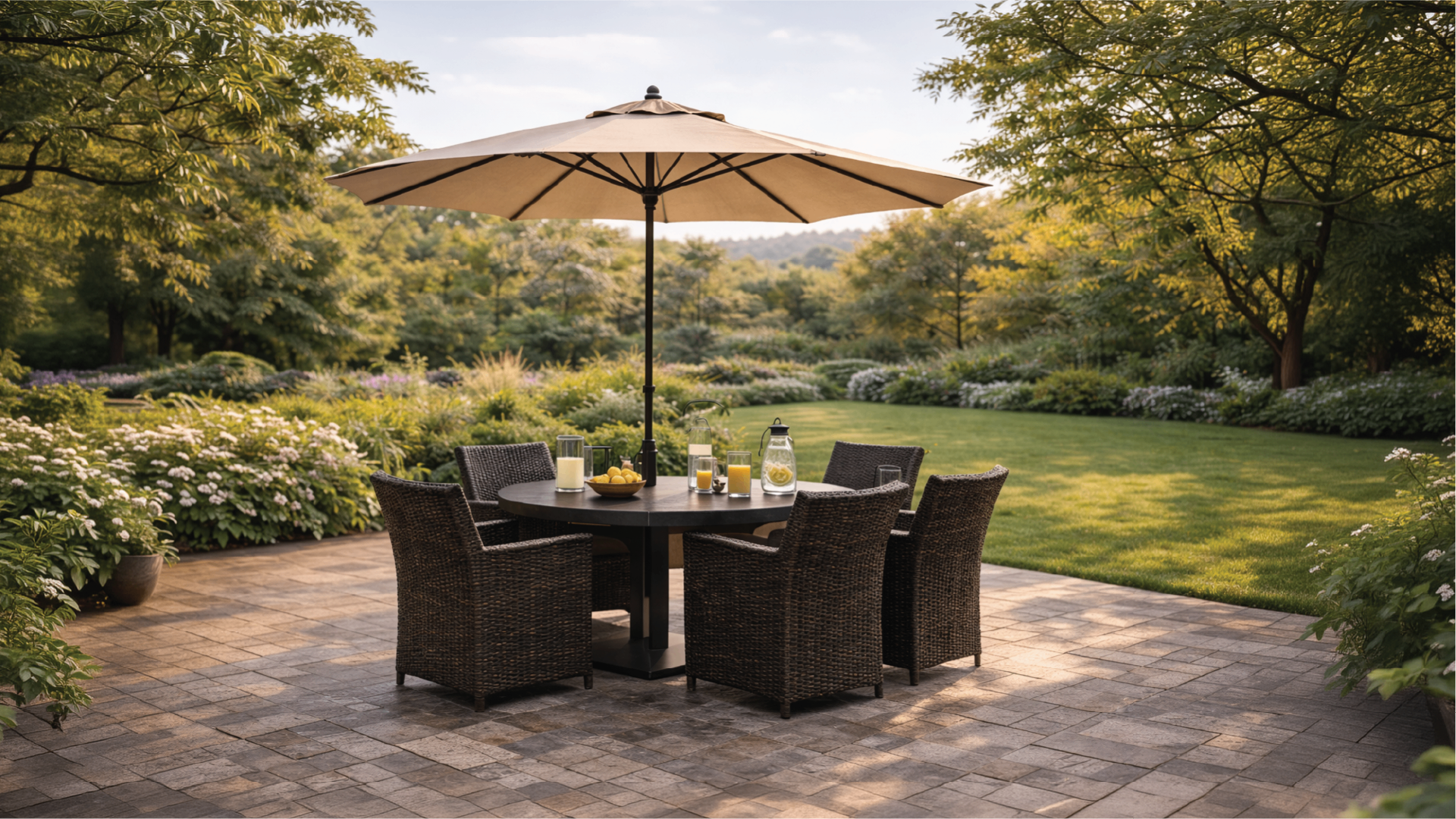
Umbrella with patio set
9 min read June 2026

How to Choose the Right Patio Umbrella for Your Space

Market or offset, size, colour, base weight, and lighting upgrades. Here is everything you need to know to pick the right patio umbrella for your outdoor space.

Read more ›
Couple sitting on patio set
9 min read March 2026

5 Ways to Create the Perfect Outdoor Entertaining Space

From fire pit evenings to al fresco dinners, here is how to set up your patio for genuinely memorable gatherings with friends and family all summer long.

Read more ›

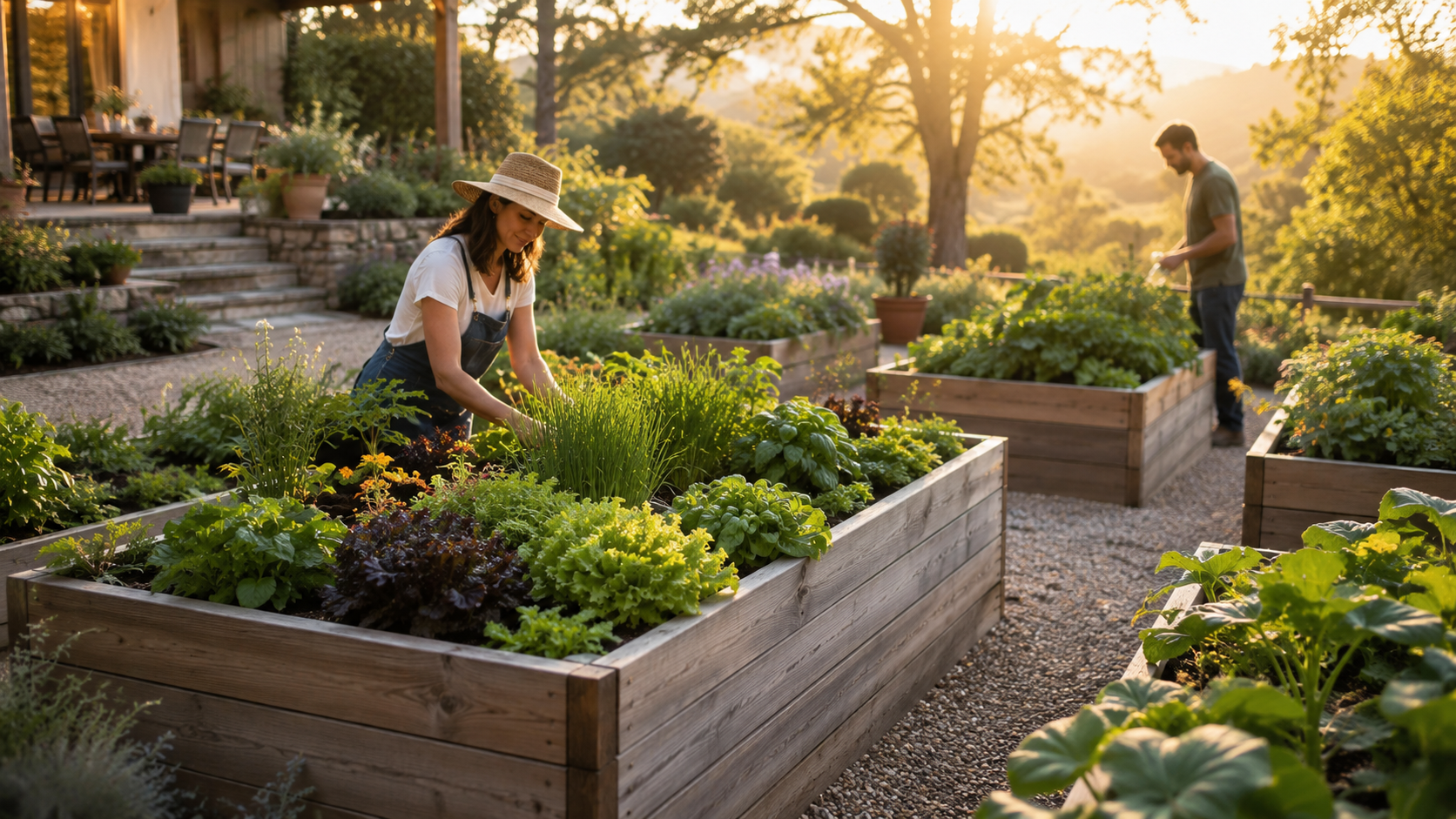
Raised Garden Beds in Canada: How to Set One Up and What to Grow This Summer

If you have ever thought about growing your own vegetables but were not sure where to start, a raised garden bed is genuinely the best answer. They are easier to manage than in-ground gardens in almost every way. They drain better, warm up faster in the spring, give you full control over your soil quality, and you can set one up in a single weekend with basic tools and no prior gardening experience. Here is everything you need to know to get started this season.

Why Raised Garden Beds Work So Well in Canada

Canada’s climate creates real challenges for traditional in-ground gardening. Short growing seasons in many regions, heavy spring rains that saturate the soil for weeks, clay-heavy ground that drains poorly and compacts easily, and unpredictable late frosts that threaten early plantings. Raised garden beds solve most of these problems in one shot, and they do it without requiring you to amend or fight with your existing soil at all.

By elevating your growing space above the ground, you gain complete control over soil quality, drainage, and even soil temperature. Raised beds absorb heat from the sun and warm up significantly faster in spring, which means you can plant 2 to 4 weeks earlier than you could in the ground in most Canadian climates. That is a meaningful head start in a region where every growing week counts.

Raised beds also create a physical barrier against lawn weeds, make it easy to apply compost and fertilizer exactly where plants need it, and are far more accessible than kneeling on hard ground. If you have back problems, limited mobility, or just find traditional gardening uncomfortable, raised beds are a genuine game-changer.
What Size Raised Bed Should You Get?

For beginner gardeners, the two most practical and popular sizes are 4 by 4 feet and 4 by 8 feet. The 4 by 4 format is a great starting point because you can reach the centre of the bed from all sides without ever stepping into the growing area. This matters more than people realize: walking on garden soil compacts it, which restricts root growth and drainage. A 4 by 4 bed gives you a comfortable reach from any side and enough space to grow herbs, salad greens, and a few key vegetables like tomatoes or peppers.

A 4 by 8 foot bed doubles your growing area and allows much more variety. You might dedicate one half to tomatoes and the other half to squash, cucumber, beans, or root vegetables. Many gardeners who start with one bed end up adding a second or third within their first or second season.

Depth also matters. Most common vegetables do well in 10 to 12 inches of soil depth, and most pre-built raised bed kits are designed to this standard. Root vegetables like carrots, parsnips, and beets prefer 18 inches or more to develop properly.

What to Fill Your Raised Garden Bed With

The soil you put in your raised bed will make or break your garden, and this is where a lot of first-time raised bed gardeners make a costly mistake. Regular topsoil and garden soil from a bag are not good choices for raised beds. They compact too easily when watered repeatedly, they drain poorly, and they do not provide the loose, airy structure that vegetable roots need to thrive.

Instead, use what is commonly called a Mel’s Mix, named after Mel Bartholomew, the pioneer of square-foot gardening who popularized the formula. It is a simple three-part blend:

One-third compost: The nutritional engine of your bed. Using a blend of different compost types gives you a broader spectrum of nutrients and beneficial microbes.

One-third peat moss or coco coir: Both options help the mix retain moisture while keeping it light and fluffy. Coco coir is a more sustainable choice since it is a byproduct of coconut processing.

One-third coarse vermiculite: This mineral improves drainage and aeration throughout the root zone. It keeps the mix from compacting over time.

This mixture will not compact, retains moisture without waterlogging, and supports vigorous plant growth season after season.

What to Plant Right Now (June Planting in Canada)

June is one of the most productive planting windows across most of Canada. The risk of late frost has passed in most provinces and territories, the soil is genuinely warm, and the long days of summer mean rapid, vigorous plant growth. Here is what to plant in your raised bed right now:

Tomatoes: Plant transplants in June for a late-summer harvest. Tomatoes thrive in the warm, well-drained soil of a raised bed.

Zucchini and summer squash: These are among the most productive vegetables you can grow. One or two plants will easily produce more than a single family can eat.

Beans: Direct sow green beans or yellow wax beans directly into the bed right now. They germinate quickly in warm soil and are ready to harvest in just 50 to 60 days from seeding.

Cucumbers: Cucumbers love warm soil and grow rapidly through June and July. Train them up a simple trellis or cage to save horizontal space.

Basil and herbs: Tuck basil near your tomatoes. Parsley, dill, and chives are easy to grow and extremely useful in the kitchen.

Lettuce and spinach: Plant these in a spot that receives partial shade during the hottest part of the afternoon to extend your harvest.

Get Started with 50% Off Raised Garden Beds at Big Box Outlet Store

Big Box Outlet Store carries a strong selection of raised garden beds, planters, and gardening supplies at outlet prices that make it accessible to get started without a large upfront investment. Whether you are looking for a cedar raised bed kit for your backyard, a galvanized steel planter for a patio, or a compact balcony garden box for a smaller outdoor space, we have options to suit a wide range of setups and budgets.

Along with the beds themselves, we also carry the essentials that make setup easy: soil amendments, bags of compost and topsoil, garden tools, watering cans, hose attachments, and more. Everything you need to get a raised bed up, filled, and planted is available in one stop.

Our garden inventory changes frequently as the season moves forward, so we encourage you to come in soon to find the best selection. Stop into your nearest Big Box Outlet Store and our team will be happy to help you find the right size, material, and accessories for your specific space and growing goals.

Ready to find summer adventure close to home?

Get Directions to a Store ›

E-Bike vs Road Bike: Which One Is Right for Your Summer in Canada?

Cycling is one of the most popular summer activities in Canada, and it is easy to see why. Whether you are commuting to work, exploring local trails, or just getting outside after a long winter cooped up indoors, a good bike changes everything about how you experience the season. But with e-bikes growing rapidly in popularity alongside traditional road bikes, a lot of people shopping for their first or next bike are genuinely unsure which direction to go. This guide breaks it down honestly so you can make the right call for your situation.

What Is an E-Bike?

An e-bike, or electric bicycle, looks and rides very much like a regular bike but comes equipped with a battery-powered motor that assists your pedaling. The key word here is assists. The motor does not do all the work for you. Instead, it amplifies your effort, making hills feel more manageable, turning headwinds into non-events, and allowing longer distances without arriving completely exhausted. Most e-bikes offer multiple assist levels, so you can dial in exactly how much help you want from the motor on any given ride.

E-bikes are popular with daily commuters, recreational riders, and anyone who wants to enjoy the benefits of cycling without the sweat-soaked arrival that sometimes comes with a challenging route. In Canada, e-bikes classified as power-assisted bicycles are permitted on most bike paths and roads and do not require a licence, registration, or insurance in most provinces, making them a genuinely practical and affordable alternative to driving for many everyday trips.

What Is a Road Bike?

A road bike is a lightweight, multi-speed bicycle built specifically for paved surfaces. Drop handlebars, narrow high-pressure tires, and a forward-leaning geometry all work together to minimize wind resistance and maximize efficiency. Road bikes are engineered to go fast and far on human power alone, and they are the natural choice for cyclists who enjoy testing their fitness, riding long distances, or training toward an event or personal goal.

There is a quality that road bike riders often describe that is hard to explain until you have experienced it: the directness of the connection between your effort and your speed, with nothing between you and the road except your own legs and lungs. For many riders, that purity is exactly why they ride. Road bikes are also simpler mechanically than e-bikes, with no battery to charge, no motor components to service, and significantly less overall weight to deal with.

E-Bike vs Road Bike: Key Differences

Here is how e-bikes and road bikes compare across the areas that matter most to most riders:

Speed: Road bikes can reach higher top speeds with a strong rider on flat terrain, but e-bikes with pedal assist keep pace comfortably on most recreational and commuting rides and often feel faster than expected on hills.

Fitness: Both types of bike give you a genuine workout. You still pedal on an e-bike and still build cardiovascular fitness. Research consistently shows that e-bike riders tend to ride more frequently and for longer distances than non-assisted cyclists.

Range: Road bikes have unlimited range as long as your legs hold up. E-bikes typically offer 40 to 100 kilometres of assisted range per battery charge depending on the model, terrain, and assist level used.

Terrain: E-bikes have a clear advantage on hilly terrain and in headwinds. Road bikes are most at home on flat or gently rolling paved routes.

Cost: Quality road bikes start around $800 to $1,500. E-bikes typically start at $1,200 to $2,500 for a solid beginner-level model.

Weight: Road bikes are much lighter at 7 to 10 kilograms. E-bikes weigh 18 to 25 kilograms due to the motor and battery.

Who Should Choose Which Bike?

An e-bike probably makes more sense for you if you want to commute without arriving at work drenched in sweat, you live in a hilly area and the ride home is a significant deterrent, you are returning to cycling after years away and want to rebuild confidence gradually, you want to ride longer distances or keep up with faster friends without struggling, or you regularly carry cargo like groceries, a child seat, or work gear.

A road bike probably makes more sense for you if fitness and cardiovascular training are your main goals, you love the challenge and discipline of riding purely on your own power, you want to train toward cycling events or personal distance records, you prefer a lighter and mechanically simpler setup, or you enjoy long weekend rides where the physical effort is a significant part of the appeal.

Here is something worth noting: you do not necessarily have to choose just one type. Plenty of cyclists own both. An e-bike for the daily commute and weekday errands, and a road bike kept for weekend rides and training.

Save on E-Bikes and Road Bikes at Big Box Outlet Store

Big Box Outlet Store is one of the best places in Canada to find bikes and cycling gear at genuine outlet prices. Our seasonal selection rotates regularly and we often carry a mix of e-bikes, cruisers, mountain bikes, and road bikes at significantly lower prices than what you would pay at a specialty cycling shop or big-box sporting goods retailer.

Whether you are picking up your very first e-bike to try a new way of commuting, or upgrading to a faster road bike after a few seasons of riding, we encourage you to come in and see what is currently available at your nearest location. Bike inventory changes frequently, and summer stock tends to move quickly once the weather turns. Our team is happy to walk you through the options, help you understand the specs that matter, and find something that fits your riding style and your budget.

Ready to find summer adventure close to home?

Get Directions to a Store ›

Best Kayaks for Beginners in Canada: What to Know Before You Buy

Summer in Canada means one thing for outdoor enthusiasts: getting on the water. Whether you are exploring a calm lake near the city, paddling a slow river through the trees, or cruising a stretch of protected coastline, kayaks and paddle boards are one of the best ways to experience the season. You do not need to be an experienced paddler or a hardcore adventurer to enjoy it. Getting started is genuinely easier than most people expect, as long as you go in with the right information.

Kayak vs. Paddle Board: Which Is Right for You?

Both kayaks and paddle boards let you explore open water at your own pace, but they offer very different experiences on the water. Kayaks are typically faster, more stable in choppy or windy conditions, and much easier to control over longer distances. They are a great fit for river touring, lake exploration, and calm coastal paddling. You sit down low in the water, which means better stability and less wind resistance when conditions pick up.

Paddle boards (also called SUPs, or stand-up paddle boards) are more versatile in a different way. You can stand, kneel, or even sit on them, and they are fantastic for calm, flat water where conditions are predictable. Many people use them for fitness, as the standing position gives your core, legs, and balance a genuine workout.

For most beginners in Canada who want to get out on lakes and rivers, we generally recommend starting with a sit-in or sit-on-top kayak. The stability and efficiency make the learning curve much gentler. If you prefer a more relaxed, wellness-focused experience on flat water, a stand-up paddle board is an excellent choice.

Inflatable vs. Non-Inflatable Kayaks: Which Is Better?

One of the first and most important decisions you will face as a new paddler is whether to go with a rigid (hard-shell) kayak or an inflatable one. Each has genuine strengths, and the right choice depends heavily on your storage situation and how you plan to get your kayak to the water.

Rigid kayaks are faster, track better in the wind, and tend to hold up better in rocky or technical environments. The trade-off is that they require a roof rack, truck bed, or trailer to transport, and they take up a lot of space in a garage or backyard.

Inflatable kayaks and paddle boards have improved enormously over the past several years. Modern inflatables made from drop-stitch PVC are surprisingly firm and rigid once fully inflated, and they perform well enough that many experienced paddlers use them as travel or backup boats. Their biggest advantage is portability. They pack down into a backpack or large bag that fits in the trunk of any car, and they can be stored in a closet when not in use.

What to Look for in a Beginner Kayak

When you are shopping for your first kayak, it helps to understand which specifications actually matter and which ones are just numbers on a spec sheet. Here are the factors that make a real difference for beginners:

Width (beam): Wider kayaks are more stable. As a beginner, look for at least 28 to 30 inches of beam width. A wider boat is harder to tip and far more forgiving as you learn your paddling technique.

Length: Shorter kayaks under 10 feet are easier to turn and maneuver, which is great for rivers and tight areas. Longer kayaks above 12 feet track straighter and are better for open water and longer distances.

Cockpit style: Sit-on-top kayaks are easier to get in and out of, drain automatically if you get splashed, and are ideal for warm-weather paddling in summer. Sit-in kayaks offer more protection from wind and cold water.

Weight capacity: Always check the listed weight limit for any kayak and leave a 20 to 30 percent buffer above your own body weight plus any gear you plan to carry.

Material: Polyethylene is the most durable and affordable plastic used in kayaks. Thermoformed ABS is lighter and stiffer but costs more.

Getting Started: Tips for First-Time Paddlers

Getting your gear right is important, but so is going into your first paddling session with a few basic habits that will keep the experience safe and genuinely enjoyable:

Wear a PFD at all times: In Canada, having a personal flotation device on board is required by law, and wearing it at all times on the water is strongly recommended for all paddlers regardless of swimming ability.

Start on calm, protected water: Your first few outings should be on small lakes, ponds, or sheltered bays where conditions are predictable. Save rivers and open water for after you have built some confidence and paddling skill.

Check the weather and wind before you go: Wind is the single biggest challenge for most beginner paddlers. Even a moderate 15 to 20 kilometre-per-hour wind can make paddling exhausting and difficult.

Take a beginner paddling lesson: Many community centres, outfitters, and paddling clubs across Canada offer affordable introductory lessons.

Bring a dry bag: Clip a small waterproof dry bag to your kayak to keep your phone, car keys, wallet, and snacks safe and dry.

Always tell someone your plan: Before every outing, let a friend or family member know exactly where you are paddling and when you expect to be back.

Find Your Kayak or Paddle Board at Big Box Outlet Store

Big Box Outlet Store carries a wide and regularly updated selection of kayaks, paddle boards, and paddling accessories at prices that make getting on the water genuinely accessible for Canadian families. Whether you are looking for a beginner-friendly sit-on-top kayak for a calm lake, a packable inflatable SUP for road trips and camping, or a full paddle kit with all the accessories, our seasonal outdoor section has what you need.

One important thing to keep in mind: our outdoor inventory changes frequently and varies by location. Kayaks and paddle boards are popular items that move quickly during the summer season, so it is worth coming in early to find the best selection and the best prices. Our team is always happy to help you compare options based on your skill level, your typical paddling environment, and your budget.

Ready to find summer adventure close to home?

Get Directions to a Store ›

How to Care for Your Patio Furniture: Tips for Every Material

Good patio furniture is a real investment, and like any investment, a little attention goes a long way toward protecting its value. The good news is that most outdoor furniture maintenance is simple and takes very little time. A few basic habits throughout the season and some proper storage at the end of it will keep your outdoor pieces looking great for years. Here is what you need to know for each of the most common patio furniture materials.

Steel & Aluminum Frames

Steel and aluminum frames are among the most popular in patio furniture because they are strong, modern-looking, and hold up well in outdoor conditions. Steel does require a bit more attention than aluminum because it can develop rust if the protective coating gets chipped or scratched. Check your frames each spring for any signs of paint damage, and touch up small chips with matching spray paint before they have a chance to develop into rust spots.

For regular maintenance, wipe steel frames down with a damp cloth and a small amount of mild dish soap once a month or so during the season, particularly after dusty or stormy periods. Rinse thoroughly and dry with a cloth to prevent water sitting in seams. Aluminum, by contrast, will not rust but it can develop a dull oxidized surface over time. Applying a thin coat of car wax once a year keeps aluminum frames looking bright and protects the surface.

Wicker (Synthetic Resin)

Synthetic resin wicker has largely replaced natural wicker in outdoor furniture because it is dramatically more durable, UV-resistant, and easy to maintain. Models like the WESTON and VALLE from Big Box Outlet Store use high-quality resin wicker specifically engineered to handle Canadian weather conditions through multiple seasons.

To clean it, start with a simple hose-down to knock off surface dust and debris. For a deeper clean, use a soft-bristle brush dipped in warm soapy water and work it gently into the weave. Rinse thoroughly afterward and let the piece dry completely in the sun before covering or moving it. While synthetic wicker is UV-resistant, keeping it under a quality umbrella during the hottest parts of the day will extend the vibrancy of the colour over the long term.

The WESTON's synthetic wicker is designed to withstand Canadian seasons.

Acacia Wood

Acacia wood is naturally one of the more weather-resistant hardwoods available, which makes it a popular choice for outdoor furniture. However, it does benefit from a little seasonal care to keep it looking its best. At the start of each season, apply a coat of teak oil or a purpose-made furniture oil to the wood. This replenishes the natural oils that sun and weather draw out over time, keeping the wood supple and protecting it from drying or cracking.

If you prefer a more hands-off approach, untreated acacia will naturally develop a silver-grey patina as it weathers. Many people actually love this look, and it is completely harmless to the structural integrity of the wood. Whether you treat it or let it silver naturally, acacia furniture is genuinely durable and can last many years with basic care and storage during the off-season.

Cushions & Fabric

Cushions and fabric are the elements of your patio setup that require the most regular attention, mainly because they are the most exposed to spills, pollen, bird activity, and moisture. Most quality outdoor cushion covers can be unzipped and machine-washed on a gentle cycle with cold water. Allow them to air-dry completely in the sun before putting them back on, since machine-drying can sometimes affect the shape of the foam inserts inside.

For spot-cleaning between washes, a solution of mild dish soap and warm water applied with a soft cloth works well on most outdoor fabric types. Address spills quickly before they have a chance to set into a stain. During extended periods of rain, or whenever the furniture will not be used for a week or more, bring cushions inside or store them in a covered deck box.

End-of-Season Storage

The effort you put in at the end of the season is just as important as what you do during it. Before putting anything away for the winter, give all your furniture a thorough cleaning so you are not storing dirt, salt, or moisture against the surfaces for months. Let everything dry completely in the sun before covering.

When it comes to covers, use breathable fabric covers rather than plastic tarps. Plastic traps moisture against the furniture, which actually accelerates rust, mildew, and material breakdown rather than preventing it. Breathable covers allow air circulation while still protecting against winter precipitation and debris. If at all possible, bring cushions and umbrellas indoors for the winter. A little extra effort at the end of the season means you pull your furniture out in spring looking nearly as good as the day you bought it.

Looking for furniture built to last?

Browse Patio Collection ›

Patio Ideas for Small Spaces: Making the Most of Your Balcony or Deck

Living in a condo, townhouse, or apartment does not mean you have to give up on outdoor living. Some of the most inviting outdoor spaces in the world are small. The key is choosing the right furniture, being strategic about layout, and making every square foot work as hard as possible. Whether you are working with a 60-square-foot balcony or a compact patio behind a townhouse, here are practical ideas that actually work.

Scale Down, Don't Skip

The most important thing you can do with a small outdoor space is resist the temptation to cram it full of furniture. Less is almost always more. Instead of squeezing in a full 5-piece dining set, choose compact pieces that are designed to perform well in tighter footprints without making the space feel overwhelmed.

The PORTER 3-piece sectional, for example, fits neatly into a corner and provides comfortable seating for three people without dominating the space. A bistro-style 2-person table and chair set works beautifully for morning coffee or a quiet dinner on a small balcony. When shopping for small spaces, look for furniture with clean lines, open frames (which feel lighter visually), and pieces that can be rearranged easily to suit different uses throughout the day.

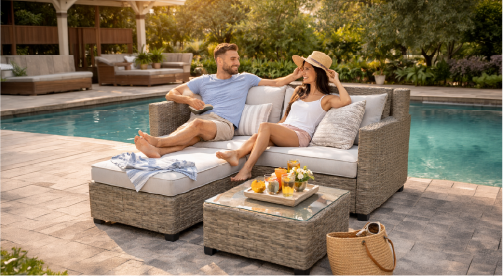
Couple on Porter Patio Set in front of the swimming pool
The PORTER 3PC Sectional is perfect for compact outdoor areas.

Go Vertical

When floor space is at a premium, the best thing you can do is start thinking vertically. Most people use only about 3 feet of vertical space on a balcony or deck, leaving a huge amount of potential completely untapped. Hanging planters, wall-mounted shelves, and vertical garden panels can add life, colour, and personality to a space without using any floor area at all.

A hanging pod chair like the ARLOW is one of the most clever options for small outdoor spaces because it provides a genuinely comfortable seat without a large footprint on the ground, and it adds a visually striking design element that makes the whole space feel more intentional. The ARLOW also folds flat for easy storage when you need the floor space back for other purposes.

Use a Compact Umbrella

Even on a small patio or balcony, having some shade makes a significant difference in how much you actually use the space on hot sunny days. The key is choosing the right umbrella size. A full 9 or 10-foot umbrella will overwhelm a compact space and likely not even fit properly. The 7-foot Tassel Umbrella is purpose-built for smaller areas. It provides genuine shade coverage for a bistro table and chairs or a compact loveseat without the visual bulk of a larger canopy.

As a bonus, the tassel fringe detail adds a playful, resort-style design touch that looks great in smaller outdoor settings. Pair it with a weighted base rather than a table-mount hole if you want the flexibility to move it around the space as the sun shifts throughout the day.

Multi-Function Furniture

Every single piece of furniture you bring onto a small patio should ideally be able to serve more than one purpose. An ottoman that functions as both additional seating and a coffee table. A side table with built-in storage underneath for spare cushions or a small lantern. A bench with a lift-up lid that doubles as a deck box for throw blankets or garden tools. Stackable chairs that can be pulled out when guests arrive and tucked away when it is just you.

The more functions each piece can serve, the more you get out of your limited space. Look for pieces described as multi-function, dual-purpose, or modular, and always think about what you will do with the furniture when it is not in primary use.

Ready to make the most of your outdoor space?

Browse Patio Collection ›

How to Choose the Right Patio Umbrella for Your Space

A patio umbrella is one of those purchases that sounds simple until you actually start shopping. Suddenly you are weighing market umbrellas against cantilever offsets, trying to figure out the right size for your furniture, and deciding between eight different fabric colours. Do not worry. Once you understand what each type is designed to do and what questions to ask, choosing the right umbrella becomes straightforward. Here is a practical breakdown to help you get it right.

Market vs. Offset: What's the Difference?

Market umbrellas are the classic choice. They have a centre pole that fits directly through a hole in your patio table, which makes them very stable and simple to use. If you have a dining table set up and want consistent shade right over your table, a market umbrella is almost always the right call. They have a clean, timeless look that works with virtually any outdoor decor style.

Offset umbrellas, sometimes called cantilever umbrellas, work completely differently. The pole mounts to the side rather than through the centre, which means the canopy hangs freely over your seating area with nothing obstructing the space below. This makes them ideal for lounge areas, daybeds, or any setup where you do not want a pole running through the middle. They also tend to offer more flexibility since most offset models can tilt and rotate to follow the sun throughout the day.

Size Matters

Umbrella size is probably the most important decision you will make, and getting it wrong is a very easy mistake. The general rule is that your umbrella canopy should extend at least 2 feet beyond your furniture on all sides for effective shade coverage. Our 9-foot Market Umbrella is the right fit for a standard 4 to 6 person dining table. The 10-foot Offset Umbrella covers a broader area and is a better match for larger lounge sectionals or bigger dining sets.

To figure out what you need, measure the total footprint of your furniture including chairs at the table, and then add 2 feet on each side. That gives you your minimum canopy diameter. When in doubt, go slightly larger rather than smaller. A slightly oversized umbrella gives you better shade as the sun moves across the sky, and it always looks proportional to the furniture below.

Picking Your Colour

Your umbrella is often the largest single visual element on your patio, so colour matters more than people expect. Bold, saturated colours like Poppy red or Marigold yellow make a strong design statement and inject personality into an otherwise neutral outdoor space. More muted tones like Linen, Stone, or Onyx blend quietly with the surroundings and let your furniture do the visual work.

Before you decide, take a look at your cushion colours and the exterior of your home. You do not need everything to match perfectly, but complementary colours that sit in the same family tend to create a more cohesive and polished look. Bring a photo of your existing setup when you come in to the store and our team can help you narrow it down quickly.

Don't Skip the Base

A good base is not optional. An umbrella without a properly weighted base is a genuine safety risk, especially on windy days, and it will not stay in position when you actually need the shade it provides. As a general guide, heavier bases in the 57 to 81 pound range offer much better stability in light wind than the thin, cheap bases that come bundled with low-quality umbrellas.

For offset umbrellas specifically, our 4-piece base system distributes weight evenly across a wide footprint, which provides the kind of stability a side-mounted cantilever design actually needs to stay put. The rule of thumb is simple: the bigger your umbrella, the heavier your base should be. If you are ever unsure, our team can help you match the right base to your umbrella size.

The LED Upgrade

If you regularly spend time on your patio in the evening, the LED Offset Umbrella is genuinely worth considering. It provides all the same shade and UV protection as a standard offset umbrella during the day, and then as the light fades, the built-in LED lights create soft, warm ambient lighting across your seating area at night.

This eliminates the need for separate string lights, extension cords running across your patio, or the hassle of replacing bulbs mid-season. It is a particularly useful solution for people who entertain in the evenings or who simply like sitting outside after dinner. The lighting quality is warm and flattering rather than harsh, which makes the whole patio feel far more inviting after sunset. For anyone looking to get the most versatility out of a single purchase, this is the option to look at.

Curious which umbrella fits your space best?

Browse Patio Collection ›

5 Ways to Create the Perfect Outdoor Entertaining Space

Your patio can be so much more than a place to sit outside. With the right furniture, layout, and a few smart additions, it becomes the heart of your home during the warmer months. It is where memories get made over great food, easy conversation, and evenings that stretch long into the night. Here are five practical ways to turn your outdoor space into a place people actually want to gather.

1. Create Conversation Zones

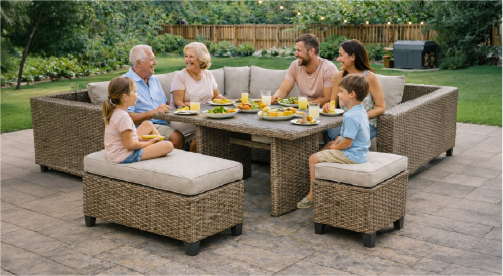
One of the biggest mistakes people make with patio furniture is pushing everything against the walls, which creates a waiting-room feel instead of a space that invites conversation. Instead, arrange your seating in a U or L shape that naturally draws people together. Sectional sets like the ASHER are designed for exactly this kind of layout, with pieces that wrap around a central coffee table to create an intimate, conversation-friendly gathering spot.

Add a coffee table in the centre for drinks, snacks, and a place to rest your feet. Think about traffic flow too. Leave a clear path so guests can move around easily without having to squeeze between chairs. The goal is a space that feels comfortable and natural, where people settle in for the long haul rather than perching awkwardly on the edge of a chair.

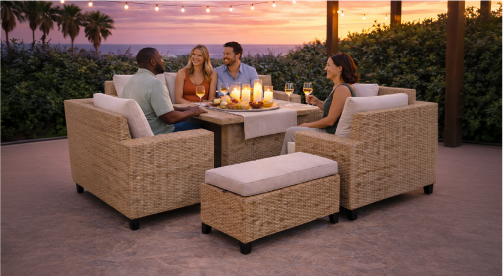
The asher patio set with family
The ASHER sectional naturally creates a conversation-friendly layout.

2. Add a Fire Element

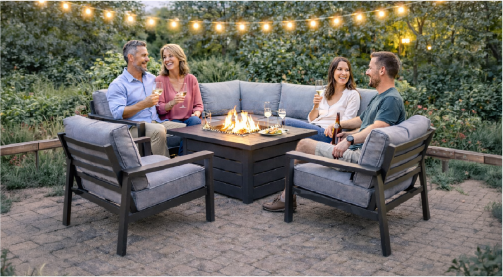
A fire pit or fire table is one of the single best investments you can make for your patio. It extends your entertaining season well into fall, creates a natural gathering point, and adds a warmth and atmosphere that is hard to replicate any other way. The ENZO patio set includes an aluminum fire pit built right into the design, serving as both a heat source and a stunning centrepiece for the whole space.

There is something genuinely special about gathering around a fire on a cool evening, drinks in hand, the conversation flowing naturally. If an integrated fire pit set is not what you are looking for, standalone fire bowls and propane fire tables are also great options that work with almost any existing patio setup. Either way, adding a fire element transforms your patio from a summer-only space into something you can enjoy from spring through to late autumn.

The enzo patio set with couples
The ENZO set's integrated fire pit keeps evenings warm and inviting.

3. Set Up an Outdoor Dining Area

Al fresco dining is one of summer’s greatest pleasures, and setting up a dedicated outdoor dining area makes it something you will actually do regularly rather than just on special occasions. Choose a dining table and chair set that fits your group size comfortably, and pair it with a good quality umbrella to provide shade during the hottest parts of the day.

Keep the setup practical and low-maintenance. Weather-resistant furniture that you can wipe down quickly after meals makes hosting feel effortless rather than like a chore. A sideboard or outdoor bar cart nearby is a nice touch for keeping drinks, utensils, and serving dishes within reach without trips back inside. When dinner runs long and the sun goes down, ambient lighting takes over and the evening keeps going.

4. Layer in Lighting

Lighting is one of the most underrated elements of a great outdoor entertaining space. String lights, lanterns, and pathway lights completely change the mood of a patio after sunset, turning it from a functional outdoor area into something genuinely beautiful and inviting.

Our LED Offset Umbrella offers a particularly clever solution for anyone who loves evening patio time. It provides full shade and UV protection during the day, and then as the sun goes down, the built-in LED lights switch on to create soft, ambient illumination right where you need it. That means no strings of lights to hang, no extension cords to manage, and no dead bulbs to replace. For anyone who entertains regularly, it is a two-for-one solution that pays for itself quickly.

5. Don't Forget Comfort

No matter how good the furniture looks, if people are not comfortable, they will not stay long. Thick, high-quality seat cushions, outdoor throw pillows, and a durable outdoor rug underfoot make your patio feel like a genuine extension of your living room rather than just some furniture sitting outside.

Choose cushion fabrics that are weather-resistant and easy to spot-clean. Many outdoor fabrics today are specifically engineered to resist fading, mildew, and moisture, so they hold up beautifully through an entire Canadian summer. An outdoor rug is especially effective at grounding the seating area and making the whole space feel intentional and put-together. These finishing touches are what turn a functional patio setup into a space people genuinely love spending time in.

Ready to host your next backyard gathering?

Browse Patio Collection ›

The Complete Guide to Setting Up Your Patio This Summer

Summer is finally here, and there is no better time to set up your outdoor space the right way. Whether you have a sprawling backyard deck or a small condo balcony, the right patio furniture can completely change how you experience the warmer months. With so many styles, materials, and layouts to choose from, getting started can feel overwhelming. This guide walks you through everything you need to know, from measuring your space to choosing materials and finding the perfect shade solution.

Step 1: Measure Your Space

Before you fall in love with a gorgeous sectional or dining set, grab a tape measure and map out your actual patio dimensions. Write down the length and width, and note any obstacles like railings, planters, steps, or doors that open onto the space. A common mistake people make is buying pieces that are too large for the area, which makes the space feel cramped and difficult to move through, or buying pieces that are too small, which makes the patio feel empty and disconnected.

As a general rule, leave at least 3 feet of clearance around furniture for comfortable movement. If you plan to have a dining table, allow extra space so chairs can pull out fully without hitting a wall or railing. Sketching a rough layout on paper before you shop will save you a lot of frustration and return trips.

Step 2: Choose Your Style

Once you know your space, think carefully about how you actually plan to use your patio. Are you someone who loves hosting friends for weekend barbecues? Look at conversation sets like the WESTON or VALLE that offer comfortable seating for a group and create a natural gathering space. If family dinners outside are your priority, a dining set like the GALVESTON seats up to seven people and gives you everything you need for meals under the open sky. And if what you really want is a place to relax, read, and unwind after work, a deep-seated sectional like the PORTER creates a cozy lounge atmosphere that feels like a proper outdoor living room.

Your lifestyle should drive every furniture decision you make. A beautiful sectional is a poor choice if you never actually use it the way it was designed. Take a few minutes to picture how you will realistically spend time outside, and let that vision guide your shopping.

Step 3: Think About Materials

Patio furniture comes in several popular materials, and each has its own strengths. Steel frames offer a modern, clean look and are very durable, but they do require some maintenance to prevent rust in wet climates. Aluminum is a great alternative because it is rust-proof, lightweight, and requires very little upkeep. Synthetic wicker (resin wicker) adds warmth and texture that looks beautiful in almost any outdoor setting, and modern versions are UV-resistant and far more durable than the natural wicker of the past.

Acacia wood is another popular choice that brings a natural, organic beauty to outdoor spaces. It is naturally weather-resistant and gets better with age, developing a handsome silver-grey patina if left untreated. All the patio furniture at Big Box Outlet Store is designed with Canadian weather in mind, and adding breathable furniture covers during heavy storms or off-season storage will extend the life of your investment significantly.

Step 4: Don't Forget Shade

Shade is something many people overlook when setting up their patio, and then regret it once the hottest days of summer arrive. A quality umbrella is one of the best investments you can make for outdoor comfort. Our 9-foot Market Umbrellas come in eight different colours so you can match your existing decor or make a bold statement. For larger lounge areas where you do not want a centre pole blocking the space, our 10-foot Offset Umbrellas provide excellent coverage and can be positioned exactly where you need the shade without any obstruction.

If you love spending time on the patio in the evening, the LED Offset Umbrella is worth serious consideration. It provides daytime shade and built-in ambient lighting at night, which means no extra string lights to hang or take down. It truly extends your outdoor hours from morning all the way through to evening.

Step 5: Visit In-Store

There is really no substitute for seeing and sitting in furniture before you buy it. Photos online can be deceiving, and what looks comfortable in a picture does not always feel comfortable in person. Visiting your nearest Big Box Outlet Store lets you experience the actual weight, feel, and comfort of every piece before you commit. Our team is knowledgeable and happy to walk you through the options, help you figure out what will fit your space, and put together a combination that works for your style and your budget.

We stock a wide range of outdoor furniture at outlet prices, which means you get genuine quality without paying retail markups. Stop in and see what is currently available at your local store.

Want to see how it all comes together?

Visit your nearest Big Box Outlet Store to see what's available in person. ›